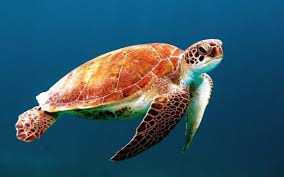
From gentle sea turtles to curious box turtles—discover species, habitats, and conservation status.
For Ms. Walker
Choose a turtle
Pick a species or group to explore.
Ready when you are—pick a turtle!
Some endangered or highly threatened turtles
Many turtles face habitat loss, poaching, and climate change. Here are several that need
our help:
Painted terrapin
Angonoka tortoise
Kemp's ridley sea turtle
Philippine forest turtle
Flattened musk turtle
Yellow-headed box turtle
Indochinese box turtle
McCord's box turtle
Roti Island snake-necked turtle
Hawksbill sea turtle
Sea turtles are ancient mariners—some migrate thousands of miles between feeding and nesting
grounds.
About sea turtles
Sea turtles are marine reptiles in the order Testudines (suborder Cryptodira).
There are seven recognized species: flatback, green, hawksbill, leatherback, loggerhead, Kemp's ridley and
olive ridley. Six of the seven are considered globally threatened.
Hard-shelled species are called cheloniids; the leatherback is the only living
member of the dermochelyid group—with a flexible, leathery shell adapted for deep,
long-distance ocean travel.
Distribution and Habitat
Sea turtles can be found in all oceans except for the polar regions. The flatback sea turtle is found
solely on the northern coast of Australia. The Kemp's ridley sea turtle is found solely in the Gulf of Mexico
and along the East Coast of the United States.[30]
Sea turtles are generally found in the waters over continental shelves. During the first three to five years of
life, sea turtles spend most of their time in the pelagic zone floating in seaweed mats. Green sea turtles in
particular are often found in Sargassum mats, in which they find food, shelter and water.[31] Once the sea
turtle has reached adulthood it moves closer to the shore.[32] Females will come ashore to lay their eggs on
sandy beaches during the nesting season.[33]
Sea turtles migrate to reach their spawning beaches, which are limited in numbers. Living in the ocean therefore
means they usually migrate over large distances. All sea turtles have large body sizes, which is helpful for
moving large distances. Large body sizes also offer good protection against the large predators (notably sharks)
found in the ocean.[34]
In 2020, diminished human activity resulting from the COVID-19 virus caused an increase in sea turtle nesting.
Some areas in Thailand saw an abnormally high number of nests, and Florida experienced a similar phenomenon.
Less plastic and light pollution could explain these observations.[35]