Planes
From small trainers to globe-spanning giants, aircraft shape how we connect, travel, and defend. Aviation technology has transformed human life in less than 120 years, shrinking the globe and making distant places accessible in a matter of hours. Below are the major categories of planes that play key roles in commerce, defense, sport, and luxury.
Widebody
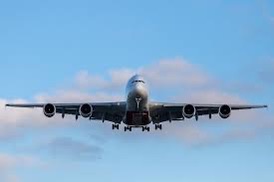
Widebody aircraft are the giants of commercial aviation. With two aisles running the length of the cabin, they are designed for long-haul flights and can carry anywhere from 200 to over 500 passengers. Their spacious layouts often include multiple seating configurations, generous galleys, and even luxury amenities on some airlines. Planes like the Boeing 747, 777, and 787, as well as Airbus’s A330, A350, and double-deck A380, have enabled affordable international travel and redefined global connectivity. They are also crucial for moving high-value cargo across continents, making them workhorses of both passenger and freight transport.
Narrowbody
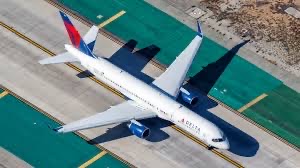
Narrowbody planes are the backbone of domestic and regional air travel. These single-aisle jets typically carry between 100 and 240 passengers, making them highly efficient for short- to medium-haul routes. The Boeing 737 and Airbus A320 families dominate this category, carrying millions of travelers every year. Their ability to operate from smaller airports and complete multiple flights in a day with quick turnaround times has made them indispensable to low-cost carriers and full-service airlines alike. While smaller than widebodies, modern narrowbodies now boast extended ranges and advanced cabins, enabling comfortable transcontinental missions.
Military Aircraft
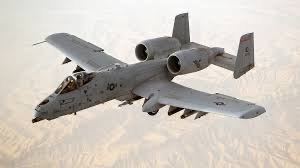
Military aircraft cover a wide spectrum of roles: stealth fighters, strategic bombers, reconnaissance platforms, and heavy transports. Fighters like the F-22 Raptor and F-35 Lightning II emphasize speed, maneuverability, and stealth to dominate contested airspace. Strategic bombers such as the B-2 Spirit are built for precision strikes, while transport aircraft like the C-130 Hercules and C-17 Globemaster III are essential for logistics, troop movement, and humanitarian aid. These machines showcase cutting-edge engineering, often pioneering technologies—composites, avionics, sensors—that later filter into civilian aviation.
Private Jets
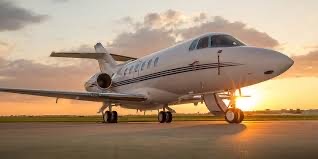
Private jets symbolize speed, privacy, and flexibility. Ranging from compact light jets that seat a handful of passengers to ultra-long-range flagships like the Gulfstream G650 and Bombardier Global 7500, they offer direct access to thousands of smaller airports, dramatically reducing total travel time. Cabins are often customized with lounges, meeting spaces, and sleeping quarters for intercontinental trips. For executives, officials, and private travelers, business aviation turns transit time into productive or restful time while bypassing crowded hubs and rigid schedules.
Gliders

Gliders—also called sailplanes—are engineless aircraft designed to soar on rising air currents, turning the invisible texture of the atmosphere into pure, silent flight. Launched by tow plane, winch, or self-launching motor glider, they climb using thermals, ridge lift, or mountain wave and can cruise for hundreds of kilometers without burning fuel. Long, high-aspect-ratio wings reduce drag and store energy efficiently, while sensitive controls reward finesse and planning. Gliding blends meteorology with piloting skill, making it both a sport and a profound way to understand how wings interact with the sky.